

As one of the nation’s fastest-growing regions, the Austin region’s air connectivity plays a vital role in sustaining economic growth and business mobility. Austin’s central location—at the crossroads of major interstate and highway systems—paired with world-class air service through Austin-Bergstrom International Airport and a network of regional airports, gives companies unparalleled access to domestic and global markets. Whether moving people, products, or ideas, Central Texas’ robust air infrastructure supports the region’s position as a leading hub for innovation, investment, and opportunity.
Commercial Airport
Austin Bergstrom International (AUS)
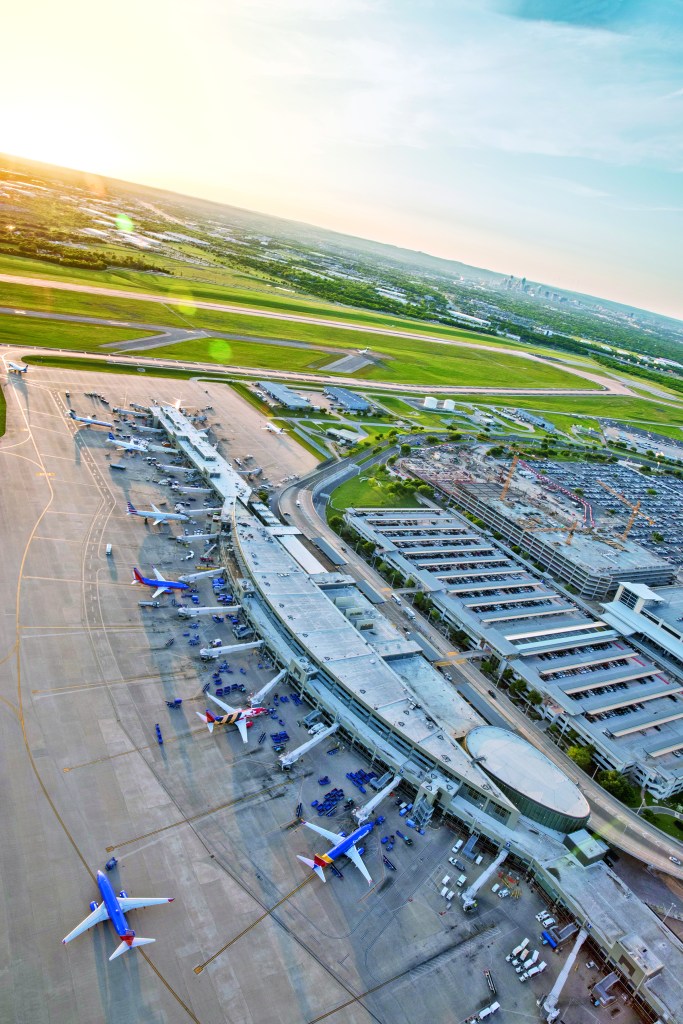
AUS is Central Texas’ gateway to the world. The Federal Aviation Administration (FAA) classifies AUS as a “large-hub” airport based on annual passenger volume, which reached 21.8 million in 2024. With a dual-runway system capable of simultaneous operations and the ability to accommodate every type of commercial aircraft flying today, AUS provides the infrastructure, reliability, and flexibility that businesses and travelers depend on.
AUS also serves as an essential cargo hub for Central Texas. More than 300 million pounds of freight move through the airport each year, supporting the logistics, technology, and manufacturing sectors that fuel the region’s growth. With its combination of robust passenger and cargo operations, AUS plays a vital role in sustaining the area’s economy and connecting Austin to global markets.
- Location: 8 miles from Downtown Austin
- Size: 4,242 acres
- Runways: Dual system with simultaneous operations, including a 12,250-foot runway
- Aircraft Operations: ~260,000 annually (~710 per day)
- Passengers (2024): 21.8M
- Nonstop Connectivity: 90+ destinations
- Airlines: 19
- On-Airport Workforce: ~8,000 employees
- Cargo: 300M pounds annually
- Regional Economic Impact: Supports ~74,000 jobs indirectly
Air Service & Regional Partnership
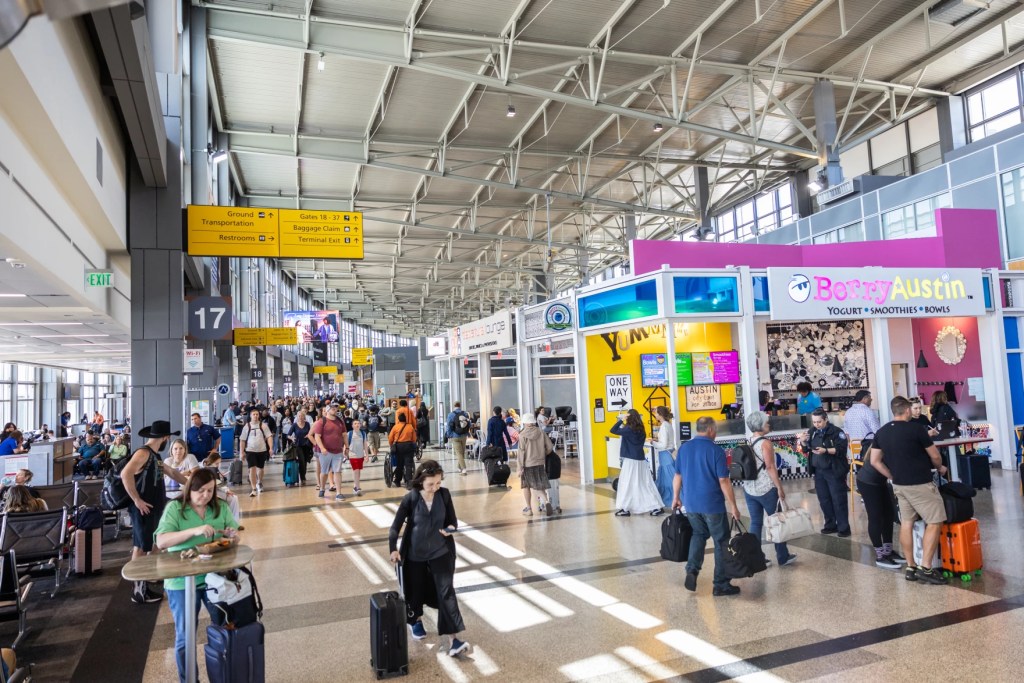
AUS connects travelers to more than 90 nonstop destinations across the United States and around the world, offering access to key domestic business centers and major international gateways. Frequent flights to markets such as New York, Los Angeles, Chicago, London, Frankfurt, and Amsterdam keep Central Texas companies within easy reach of clients, headquarters, and global partners.
AUS also works directly with corporate employers, tourism organizations, and economic development groups to ensure that air service growth aligns with the region’s needs. This coordinated strategy gives airlines confidence to invest in the Austin market, fosters long-term sustainability for air routes, and provides the reliable connectivity that helps employers attract and retain top talent.
Airport Growth and Expansion
To meet the demands of one of the fastest-growing metropolitan areas in the country, AUS is investing in a $4+ billion Airport Expansion and Development Program known as Journey With AUS. This multi-year effort will nearly double the size of the airport and reimagine the passenger journey—from curb to gate and back again.
Discover all the latest updates from AUS
Regional Airports - General Aviation
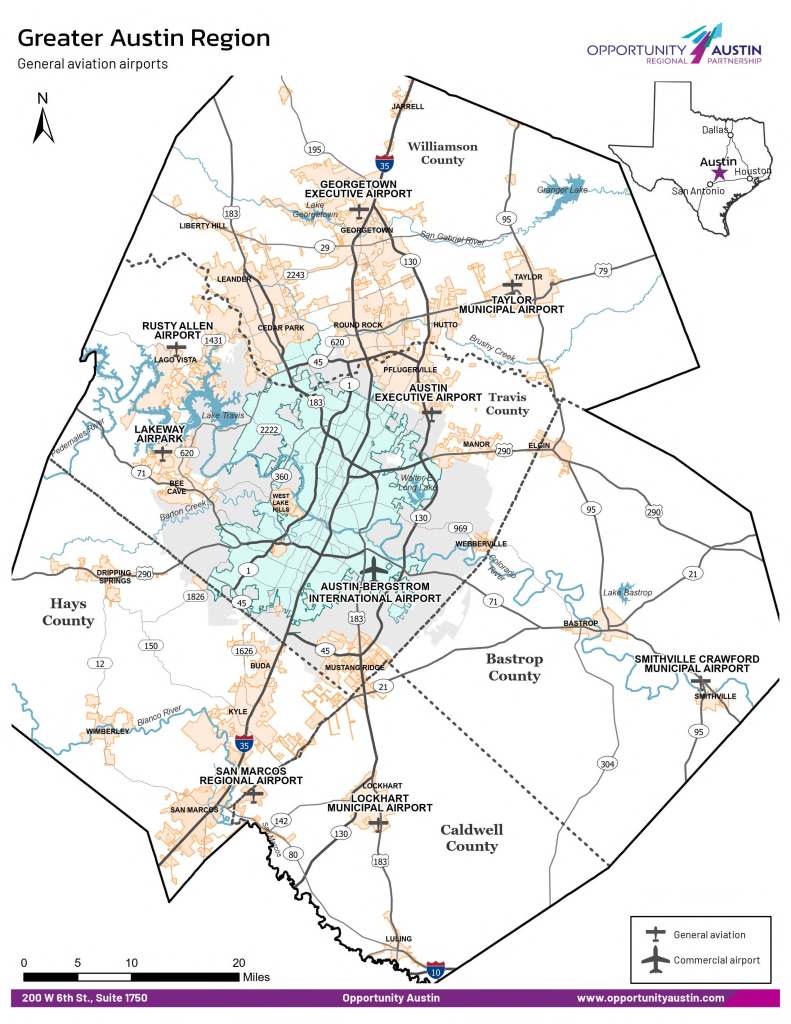
General aviation airports
General aviation services are available at Austin-Bergstrom International Airport from two fixed base operators. Corporate jet access is also available from Austin Executive Airport located on State High 130 near Pflugerville and also at two municipal airports in Georgetown and San Marcos. Each of these airports have runways exceeding 5,000 ft. and have service from fixed based operators and options for hanger services. There are six additional general utility airports in the metro area with runways less than 5,000 ft. that handle traffic from smaller planes.
A premier business and general aviation facility with a 6,025-foot runway and award-winning Henriksen Jet Center FBO. Located along SH-130, it offers quick access to downtown Austin, major tech campuses, and Circuit of The Americas.
Located at Johnny Gantt Field, this full-service airport offers aviation fuel, avionics, and maintenance services. Its 5,004-foot runway provides convenient access to the Texas Hill Country and supports business and general aviation operations.
A private, nonprofit airfield on 39 acres near Lake Travis, featuring a 4,000-foot runway, terminal building, and direct taxi access for adjacent homes. Ideal for recreational flying and Hill Country access.
Located two miles south of Lockhart, this general aviation airport offers a 4,000-foot runway, aviation-related business space, and training and patrol operations, supporting local and regional industry needs.
Located minutes from downtown and near Circuit of The Americas, this luxury FBO offers high-end amenities, conference rooms, pilot lounges, and Hill Country-inspired design—serving corporate and private travelers.
Serving Lago Vista and the surrounding communities, Rusty Allen provides convenient general aviation access to northwest Travis County and the north shore of Lake Travis.
Strategically positioned between Austin and San Antonio, this FAA-designated reliever airport offers strong business aviation services and ample space for growth, serving as a hub for mobility and technology industries.
Publicly owned and city-managed, Smithville’s airport features a 4,000-foot lighted runway, ramp area, and pilots’ lounge—supporting flight instruction, agricultural aviation, and recreational flying.
A general aviation business service airport supporting the City of Taylor’s growing industrial base, located just west of downtown with easy access to Highway 79.
| AIRPORT | LOCATION | DISTANCE FROM DOWNTOWN | LENGTH OF LONGEST RUNWAY |
|---|---|---|---|
|
Austin |
9.2 mi |
12,248 ft |
|
|
Austin |
17.6 mi |
6,025 ft |
|
|
Georgetown |
31.6 mi |
5,000 ft |
|
|
Austin |
22.4 mi |
3,930 ft |
|
|
Lockhart |
32.5 mi |
4,001 ft |
|
|
Lago Vista |
35.4 mi |
3,808 ft |
|
|
San Marcos |
34.6 mi |
6,330 ft |
|
|
Smithville |
41.3 mi |
4,000 ft |