

Austin’s next phase of growth is no longer about whether the region will grow. It’s about whether the region can build fast enough, train fast enough, and execute efficiently enough to sustain that growth without eroding the advantages that made Austin successful in the first place.
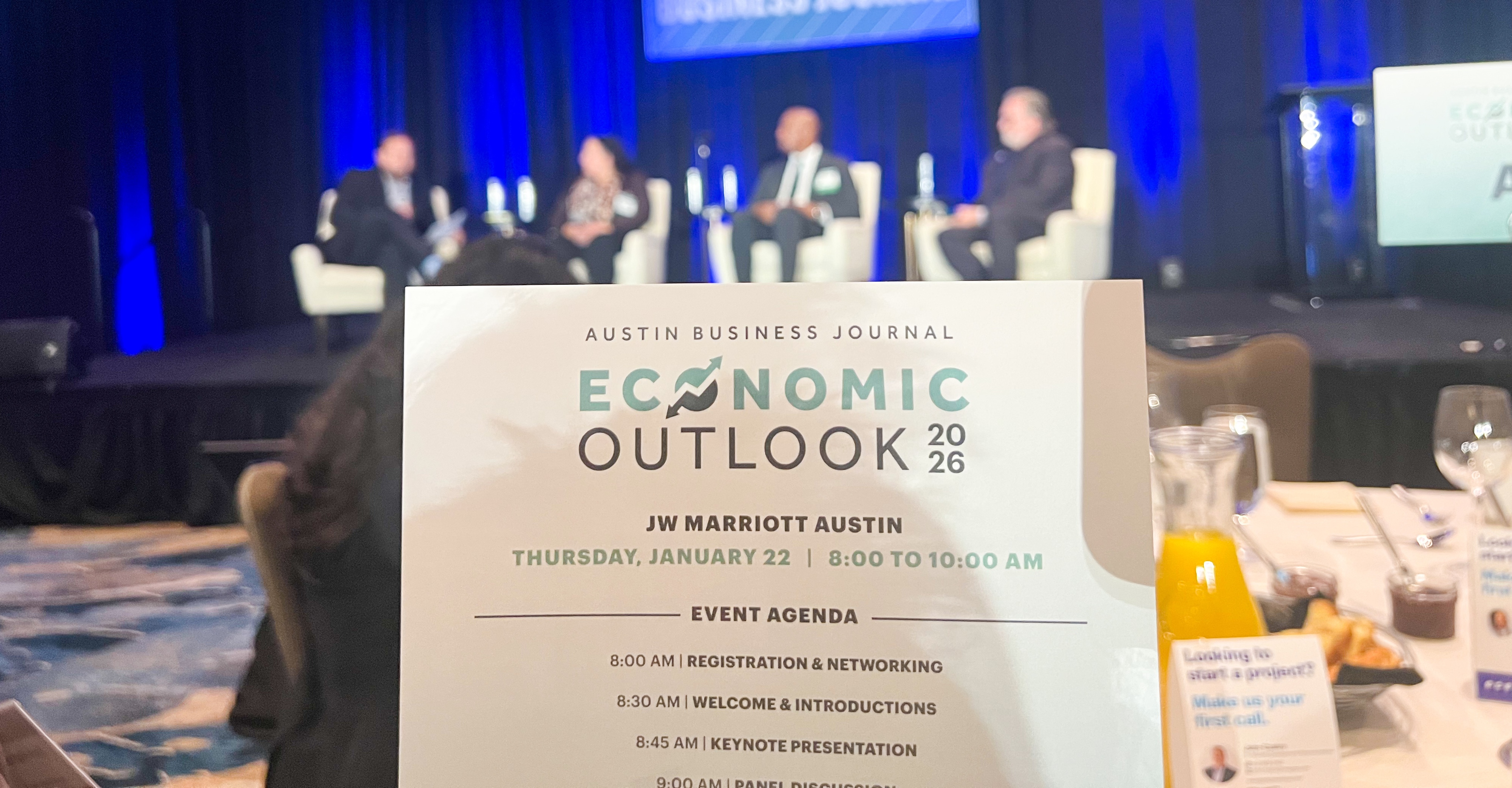
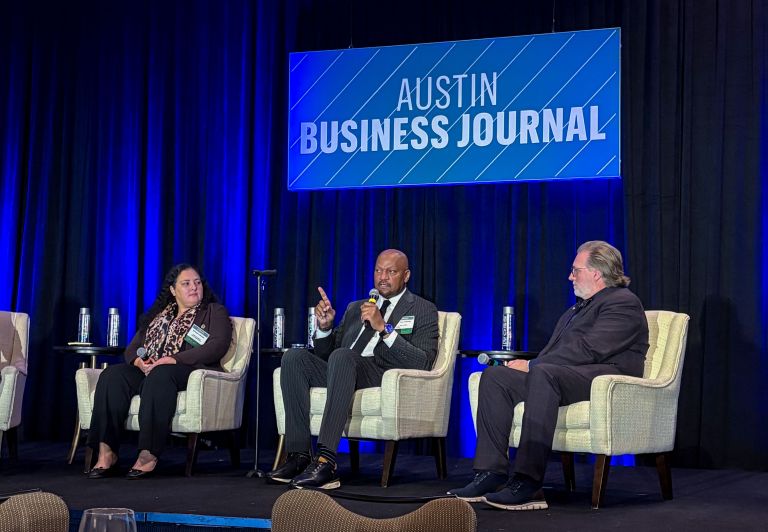
That message defined the Austin Business Journal’s 2026 Economic Outlook, where Opportunity Austin served as a presenting sponsor and regional economic development partner.
Infrastructure Is the Constraint and the Opportunity
Growth is increasingly limited not by demand, but by capacity. Infrastructure is now a determining factor in regional competitiveness. This is a national reality that Austin is experiencing firsthand, according to David Spika’s macroeconomic keynote.
Austin-Bergstrom International Airport (AUS) provides a clear case study for the problem and solution: Originally built to serve roughly 11 million passengers annually, AUS is now handling more than 21 million, reaching projections years ahead of schedule. Airport leadership emphasized that the current expansion is not incremental. It is effectively the construction of a new airport around the existing one, including new concourses, roadways, and expanded gate capacity.

“This is not ‘nice-to-have’ infrastructure. It’s essential if Austin wants to remain globally competitive and continue attracting people, business, and investment.”
Ghizlane Badawi,
Chief Executive Officer, Austin-Bergstrom International Airport (AUS)
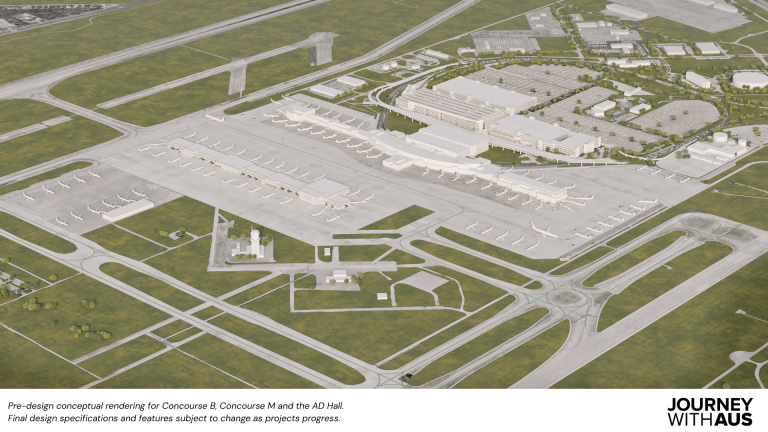
This investment is already generating more than $10 billion in annual economic impact and will grow significantly as capacity increases.
Workforce Will Evolve with Industry Demands
While infrastructure enables growth, workforce now determines its pace.
ACC Chancellor Russell Lowery-Hart highlighted a major shift in who the region must serve. The fastest-growing under-credentialed group in Central Texas is not traditional students, but working adults ages 35 to 54 who need reskilling and upskilling to stay competitive.
Community colleges are becoming the primary engine for workforce adaptation, particularly as artificial intelligence reshapes technical and professional roles. Priority needs identified during the discussion included advanced manufacturing, infrastructure trades, healthcare, and AI-enabled technical roles. These demands directly align with major regional investments, from semiconductors to large-scale infrastructure projects.

“People are going to need Austin Community College, maybe for the first time in their lives, and we have to be ready for them.”
Dr. Russell Lowery-Hart,
Chancellor, Austin Community College
Government Efficiency in Economic Development
For companies evaluating locations, speed and certainty increasingly matter as much as incentives. Regions that can deliver both will have a competitive edge.
City leadership noted that development review timelines and permitting processes are no longer back-office functions. They are strategic tools that influence investment decisions. With a significant share of delays tied to incomplete submissions, new approaches, including AI-assisted plan review, are being explored to improve outcomes on both sides.
Collaboration and Quality of Life are Key
Across every topic, there was a clear message that no single institution can solve these challenges alone.
Infrastructure, workforce development, and efficient governance all require sustained collaboration across public agencies, educational institutions, employers, and regional partners. Growth at Austin’s scale demands coordination, shared accountability, and early engagement.
Another important recognition: Austin’s quality of life is not incidental. It is the region’s core competitive advantage.

“Austin is not a dying city, and we should not make it one. The challenge is managing growth in a way that sustains the services and quality of life people expect.”
Dr Eric Johnson,
Assistant City Manager
Infrastructure investment, workforce alignment, and process reform are mechanisms to ensure growth strengthens livability rather than undermining it. Preserving what makes Austin distinctive while continuing to expand opportunity is the defining challenge of the region’s next chapter.