
Over the past few decades, tech giants have transformed Central Texas into a thriving hub of innovation and economic prosperity. Companies like Samsung and Tesla make significant contributions not only by creating thousands of local jobs, but by contributing millions to our tax revenue and attracting substantial capital investment.
Just as importantly, these companies invest heavily in new workforce development programs that provide local residents with the training needed to access well-paying careers in high-tech manufacturing, broadening our skilled local workforce and ensuring more Central Texans share in our region’s prosperity.
Samsung
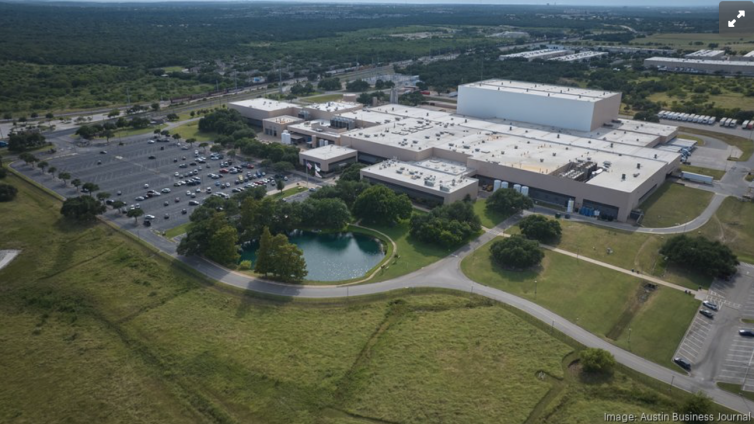
In the nearly 30 years since Samsung Electronics began construction on its first Central Texas semiconductor fabrication facility, the company has invested or announced plans to invest a total of $80 billion in Austin and Taylor.
The $18 billion investment in its two Austin facilities ranks among the largest direct foreign investments in U.S. history. However, the community benefits Samsung and other companies generate when they make long-term, multi-billion commitments in the Austin region extend far beyond their capital investments and direct payrolls.
To better understand the far-reaching impact of Samsung’s economic engine, it’s helpful to look at the benefits generated during a single year.
According to Samsung’s 2023 Economic Impact Report, from 2022 to 2023 the company:
- Doubled its regional economic impact from $13.6 billion to $26.8 billion.
- Employed nearly 15,000 people directly but supported a total of 38,144 jobs in the Austin and Taylor areas along with $1.7 billion in workers’ salaries.
- Generated $245.6 million in annual revenues for local taxing districts, as well as paid $15.5 million in property taxes to Manor ISD.
- Actively engaged more than 14 Central Texas school districts for onsite visits and semiconductor career information sessions.
- Hired 48 Taylor ISD students as paid summer interns.
- Donated $1 million toward Taylor Independent School District’s new career and technical education (CTE) building at Taylor High School. The funds will go toward equipment, staff and training needed for classrooms, dual credit labs for coursework, robotics and automation and other needs for the district’s manufacturing program.
- Launched its 5-Star Workforce Development plan and provided significant contributions to key learning institutions such as The University of Texas at Austin, Texas A&M University, and the Taylor Independent School District.
The Tesla Effect
In 2020, Tesla pledged to invest $1 billion to build an electric vehicle manufacturing facility just east of Austin, committing to employ a minimum of 20,000 workers. By the end of 2023, the company exceeded these plans, employing 23,000 in the region and announcing an additional investment of over $700 million to expand the facility. Although the company has since trimmed its global workforce, Tesla remains one of the Austin region’s largest private employers.
Sometimes referred to as “the Tesla effect,” the Austin Regional Manufacturers Association estimates the company generates about an 8-to-1 job creation ratio through supporting logistics and manufacturing in the region. The Austin Business Journal credits the EV manufacturing giant as instrumental to attracting more than a dozen manufacturing companies to the Austin region, which collectively employ or plan to employ 4,600 people.
Additional positive impacts of Tesla’s investment include:
- Nearly $50 million paid in property taxes to Del Valle ISD between 2020 and 2023.
- More than $15 million paid in property taxes to Travis County on land that was previously home to a sand and gravel pit and generated less than $700 in tax revenue a year, according to Travis County officials.
- In 2024, Tesla made a $600,000 donation to pay for equipment at the new Gigafactory Texas Pathways to Technology (P-Tech) Manufacturing Studio at DVISD Early College High School. The P-Tech program provides students with four years of hands-on training to prepare them for a career in robotics and automation.
- Since 2021, 144 DVISD graduates have secured full-time careers at Gigafactory Texas through the district’s partnership with Tesla’s Manufacturing Development Program.
- In 2023, 207 students secured internships and a total of 564 workforce certifications were obtained.
- Creation of the Tesla START Manufacturing program at Austin Community College, an intensive 14-week training program. Participants are paid employees at Tesla while they complete the program, and eligible for full-time positions upon completion.
NXP
In 2023, Dutch-headquartered semiconductor company NXP announced plans for a $290M modernization of their two Austin-area wafer fabrication plants, located in East Austin and Oak Hill. The Austin City Council approved a $1 million economic incentives agreement, which will be reinvested to support a workforce development program, outreach to underserved communities, and childcare assistance for both NXP’s employees and citywide programs.
Later that year, the NXP Foundation donated $250,000 to the Austin Community College Foundation in support of the school’s Engineering Technology and Advanced Manufacturing Program. The program will be co-located with the ACC High School Advanced Manufacturing IMPACT Academy at ACC Highland, where students can work toward college credits while they are still in school.
In addition, beginning in the 2023-24 academic year, the NXP-endowed scholarship program will begin making awards targeting candidates from the Advanced Manufacturing Academy.
Continuing to Accelerate Economic Growth
Samsung, Tesla and NXP are just a few examples of how big tech has significantly bolstered the Austin region’s economic landscape. Their extensive investments not only generate thousands of local jobs and substantial tax revenue, but also foster a robust ecosystem of innovation and capital growth. Their far-reaching impacts underscore their vital role in ensuring the long-term growth and prosperity of our region.